Table of Contents
Experts highlight the critical role of analytical technology in ensuring high-quality potash for global food security.
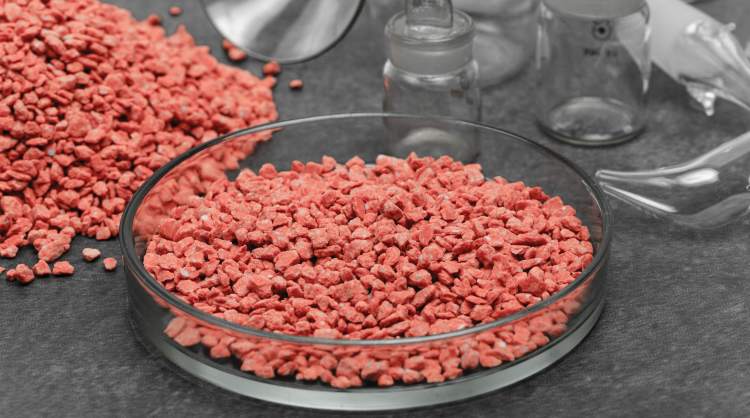
The global potash fertiliser market is on a strong growth trajectory, projected to expand from £21.8 billion in 2025 to £34.0 billion by 2035*. Rising global food demand, technological innovations in agriculture, and the adoption of sustainable farming practices are driving this growth, highlighting potash, primarily potassium chloride, as an essential ingredient in modern agriculture.
As farmers produce more food on increasingly marginal soils and cultivate high-value crops that require precise nutrition, potash supports healthy plant growth, enhances yields, and maintains soil fertility, making it indispensable for productivity and global food security.
Dr.Uwe König, Business Development Manager at Malvern Panalytical, explains that understanding the variability and composition of potash ore is essential for ensuring consistent fertiliser quality and safeguarding global food security. Advanced analytical techniques are central to building a complete profile of ore and final products.
Quality potash: securing the future of global agriculture
Potash is never mined in a pure form. It is typically mixed with sodium chloride, gypsum, and clay minerals, which can significantly impact both processing efficiency and final product performance. Clay, as an example, can absorb water intended for crops, increasing irrigation needs and stressing water resources in already fragile regions. Other contaminants can disrupt soil nutrient balance, reduce yields, and challenge operational efficiency, underscoring the critical importance of precise quality control.
Inconsistent potash quality can quickly spiral into a major operational challenge. Off-spec batches must be reprocessed, tying up equipment and delaying production, while high clay content can block processing lines and halt operations entirely. Delivering substandard potash to customers can result in penalties, chargebacks, and reputational damage that takes years to repair. In such an environment, reactive approaches to quality control are no longer viable. Modern potash production demands proactive, precise, and rapid analytical oversight.
Analytical control as a competitive advantage
Modern potash production increasingly relies on speed and responsiveness. Traditional sampling methods, which once allowed laboratories to analyse only a handful of samples per day, are no longer sufficient in an era of highly variable ores and complex production requirements.
Leading operations are turning to advanced analytical technologies to maintain control throughout the production process. At the mine face, X-ray diffraction or Aeris systems provide early insight into mineral composition. Identifying gypsum, halite, clay minerals, and other disruptive components allows operators to precisely calibrate flotation strategies and reagent concentrations, rather than relying on reactive adjustments. By analysing ore clusters statistically, some operations have even transformed natural variability into a competitive advantage.
As ore progresses through the production process, elemental precision becomes equally important. It is further ensured through Zetium XRF systems, which detect impurities before and after flotation, safeguarding the integrity of the final product. Final verification using combined XRD and XRF analysis confirms that potash meets both regulatory requirements and customer specifications, avoiding costly rejects and protecting market reputation. Even waste management benefits from advanced analytics, with tailings and byproducts being carefully monitored to ensure environmental compliance and sustainable operations.
The strategic advantages of the potash industry
The potash industry is being shaped by global trends, including population growth, the expansion of agriculture into marginal soils, a focus on high-value crops, and ongoing geopolitical supply chain disruptions. These forces are driving unprecedented pressure on producers to deliver consistent, high-quality fertiliser. In this environment, companies that can reliably provide specification-grade potash while maintaining efficiency and sustainability will stand out as market leaders. Analytical instruments are no longer just tools for quality control; they have become strategic assets that allow producers to respond instantly to changing ore conditions, optimise processing efficiency in real time, and maintain the consistency that modern agriculture demands.
By integrating precision analytical control throughout the production process, operations can turn ore variability from a potential risk into a competitive advantage. From the mine face to the farmer’s field, every stage of potash production depends on accurate, timely analysis to safeguard product quality, protect profitability, and meet regulatory and customer expectations. In a market where tolerances are narrow and stakes are high, robust analytical capability is essential for maintaining both operational performance and a strong competitive position.
Dr.Uwe König, Business Development Manager at Malvern Panalytical, says:
“The growing demand for high-quality potash is both a response to soaring food needs and to increasingly sophisticated requirements by modern agriculture. High-value crops, precision farming techniques, and soil-specific fertiliser programs require products that meet exact nutrient specifications. Any variation in potassium content or the presence of impurities can affect crop performance, increase input costs for farmers, and reduce overall sustainability. Producers leveraging analytical technologies to maintain strict quality standards go beyond meeting market demand to enabling the agricultural sector to operate with greater efficiency and sustainability in challenging environments.”
“Advanced analytics bring operational and agronomic benefits, adding much value to risk management. In fact, real-time mineralogical and elemental data enable producers to predict processing issues, avoid expensive downtime, and quickly react to ore variability. This proactive approach reduces the risk of financial losses caused by off-spec batches, process blockages, or regulatory non-compliance. It also provides traceable data for customers and regulators, enhancing transparency and building trust across the supply chain, an increasingly important factor in a global market facing growing scrutiny on sustainability and product integrity.”
https://www.malvernpanalytical.com/en
*https://www.precedenceresearch.com/potash-fertilizers-market