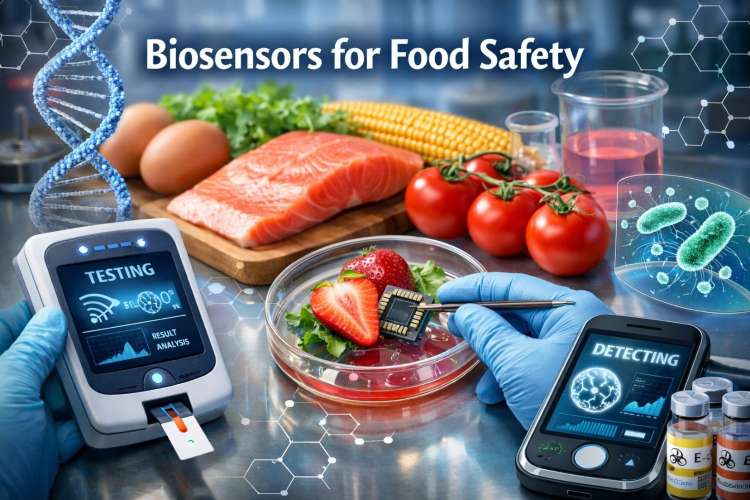
The global food industry is undergoing a major transformation as safety, quality assurance, and traceability become top priorities across the supply chain. In this rapidly evolving landscape, biosensors are emerging as one of the most promising technologies for ensuring safer food systems. According to industry estimates, the global biosensors for food safety market reached USD 6.1 billion in 2024 and is projected to grow at a CAGR of 8.4%, reaching nearly USD 12.3 billion by 2033. This remarkable growth reflects the increasing demand for rapid, accurate, and real-time food contamination detection solutions across the world.
The Growing Importance of Food Safety
Food safety concerns have intensified globally due to rising cases of foodborne illnesses, contamination incidents, and stricter regulatory frameworks. Modern food supply chains are becoming increasingly complex, involving multiple stages of sourcing, processing, transportation, storage, and retail distribution. As a result, traditional laboratory-based testing methods are often unable to meet the growing need for instant and decentralized food safety monitoring.
Biosensors are helping bridge this gap by enabling quick, sensitive, and on-site detection of harmful substances in food products. Their ability to provide real-time analysis makes them invaluable for ensuring compliance with safety standards while minimizing the risks associated with contaminated food reaching consumers.
For countries like India, where agriculture and food processing play a critical role in the economy, biosensors are becoming increasingly relevant in strengthening quality assurance systems across both domestic and export markets.
Understanding Biosensors in Food Safety
Biosensors are analytical devices that combine biological components with physicochemical detectors to identify contaminants and hazardous substances in food. These systems are designed to detect pathogens, toxins, allergens, pesticide residues, antibiotics, and chemical contaminants with high precision. Unlike conventional testing methods that often require sophisticated laboratory infrastructure and lengthy processing times, biosensors offer several advantages:
Rapid and real-time detection
High sensitivity and specificity
Portability and ease of use
Reduced testing costs over time
Minimal dependency on centralized laboratories
These capabilities make biosensors particularly valuable in modern food production environments where rapid decision-making is essential.
Key Factors Driving Market Growth
Rising Incidence of Foodborne Diseases
Increasing outbreaks of food contamination and foodborne illnesses have intensified the need for faster detection technologies. Consumers today are more conscious about food quality, forcing manufacturers to adopt advanced monitoring systems to maintain trust and regulatory compliance.
Expansion of Processed and Packaged Foods
The growing consumption of packaged and convenience foods worldwide has increased the need for continuous monitoring during production, storage, and transportation. Biosensors enable manufacturers to identify contamination risks before products reach the market.
Stringent Government Regulations
Regulatory authorities across global markets are introducing stricter food safety guidelines to ensure product quality and consumer protection. Compliance with these standards is encouraging food manufacturers to invest in advanced biosensor technologies.
Technological Advancements
Innovations in nanotechnology, biotechnology, artificial intelligence, and microelectronics are significantly improving biosensor performance. Modern biosensors are becoming more compact, affordable, accurate, and easier to integrate into automated food processing systems.
Major Types of Biosensors Used in Food Safety
Optical Biosensors
Optical biosensors detect contaminants by measuring changes in light properties during biological interactions. They are commonly used for identifying pathogens, toxins, and spoilage organisms in food products.
Electrochemical Biosensors
Among the most widely adopted biosensors, electrochemical systems measure electrical signals generated by biochemical reactions. Their high sensitivity and cost-effectiveness make them ideal for detecting pesticide residues, heavy metals, and microbial contamination.
Piezoelectric Biosensors
These biosensors detect mass changes occurring on sensor surfaces and are highly effective for microbial analysis and pathogen detection in food samples.
Thermal Biosensors
Thermal biosensors monitor heat changes generated during biochemical reactions. They are frequently used in enzyme-based food analysis systems.
Applications Across the Food Supply Chain
Biosensors are increasingly being deployed throughout the entire food production ecosystem.
Agriculture and Farming
Farmers and agricultural producers use biosensors to monitor pesticide levels, soil contamination, and crop health before harvesting. Early detection helps reduce contamination risks and improves crop quality.
Food Processing and Manufacturing
In food processing facilities, biosensors help monitor microbial contamination during production. Real-time testing enhances process control and ensures compliance with food safety standards.
Packaging and Storage
Smart packaging integrated with biosensors is gaining traction as a next-generation food safety solution. These systems can detect spoilage, monitor freshness, and even indicate shelf-life conditions.
Retail and Distribution
Portable biosensors allow distributors and retailers to conduct on-site quality inspections, reducing the possibility of unsafe products entering the consumer market.
India Emerging as a Key Growth Market
India’s expanding food processing industry, strong agricultural sector, and increasing emphasis on food quality standards are positioning the country as a major growth contributor in the biosensors market.
Government-led food safety initiatives and rising investments in food technology infrastructure are encouraging wider adoption of biosensor-based solutions. Additionally, Indian startups and research institutions are actively developing affordable and scalable biosensor technologies suited for both domestic and export-oriented industries. The country’s focus on digital transformation and smart manufacturing is also expected to accelerate biosensor integration across food processing operations.
Technological Innovations Reshaping the Industry
Nanotechnology Integration
Nanomaterials are significantly enhancing biosensor sensitivity and detection speed. These advanced materials enable the identification of contaminants even at extremely low concentrations.
AI and IoT-Enabled Biosensors
The integration of artificial intelligence and Internet of Things (IoT) technologies is transforming biosensors into intelligent monitoring systems capable of predictive analysis and remote tracking.
Lab-on-a-Chip Technology
Miniaturized lab-on-a-chip biosensors are revolutionizing food testing by enabling multiple analyses on a single compact platform. These devices offer faster processing and reduced operational costs.
Smartphone-Based Detection Systems
Mobile-integrated biosensors are making food safety testing more accessible, especially in remote and decentralized environments. Smartphone connectivity also improves data sharing and traceability.
Challenges Facing the Market
Despite strong growth prospects, several challenges continue to affect large-scale adoption of biosensors in food safety applications.
High research and development costs
Lack of standardized regulatory frameworks across regions
Limited awareness in developing economies
Technical complexities in large-scale implementation
Integration challenges within existing food processing systems
Addressing these barriers will require stronger collaboration between governments, research organizations, technology providers, and food manufacturers.
Competitive Landscape
The biosensors for food safety market features the presence of several global players focused on innovation, product development, and strategic collaborations. Key companies operating in the market include:
Bio-Rad Laboratories, Inc.
Thermo Fisher Scientific Inc.
Siemens Healthineers AG
F. Hoffmann-La Roche Ltd
Honeywell International Inc.
DuPont de Nemours, Inc.
Neogen Corporation
Agilent Technologies, Inc.
Randox Laboratories Ltd.
Qisda Corporation
Metler Toledo International Inc.
PerkinElmer, Inc.
3M Company
Biosensor Applications Sweden AB
Biacore (Cytiva)
Nova Biomedical Corporation
Sartorius AG
Yokogawa Electric Corporation
R-Biopharm AG
Bayer AG
These companies are increasingly investing in advanced sensing technologies, AI integration, and portable testing solutions to strengthen their market presence.
Future Outlook
The future of biosensors in food safety appears highly promising as the food industry moves toward smarter, faster, and more transparent quality assurance systems. With ongoing advancements in digital technologies and increasing regulatory support, biosensors are expected to become a standard component of modern food safety management.
Emerging trends likely to shape the future of the industry include:
Increased adoption of real-time monitoring systems
Expansion of smart packaging solutions
Greater integration with blockchain for supply chain transparency
Growth in personalized food safety testing
As the global food ecosystem continues to evolve, biosensors are set to play a crucial role in enhancing consumer safety, reducing food waste, and building more resilient food supply chains. The technology is no longer just an innovation—it is rapidly becoming an essential pillar of the future food industry.
Source:- https://growthmarketreports.com/report/biosensors-for-food-safety-market